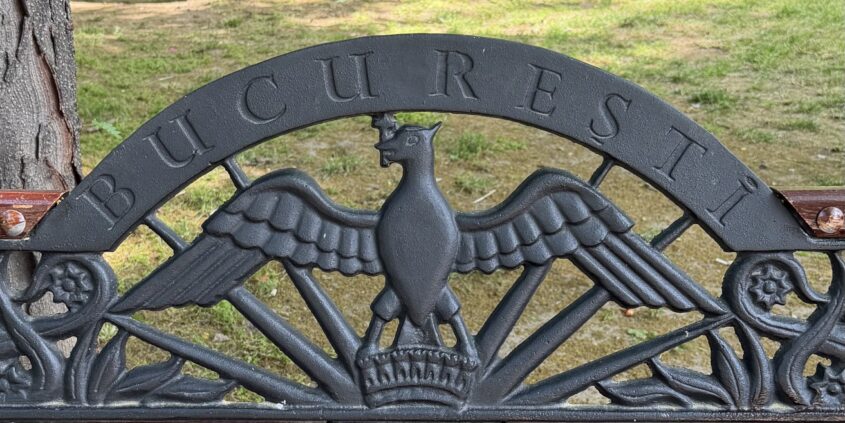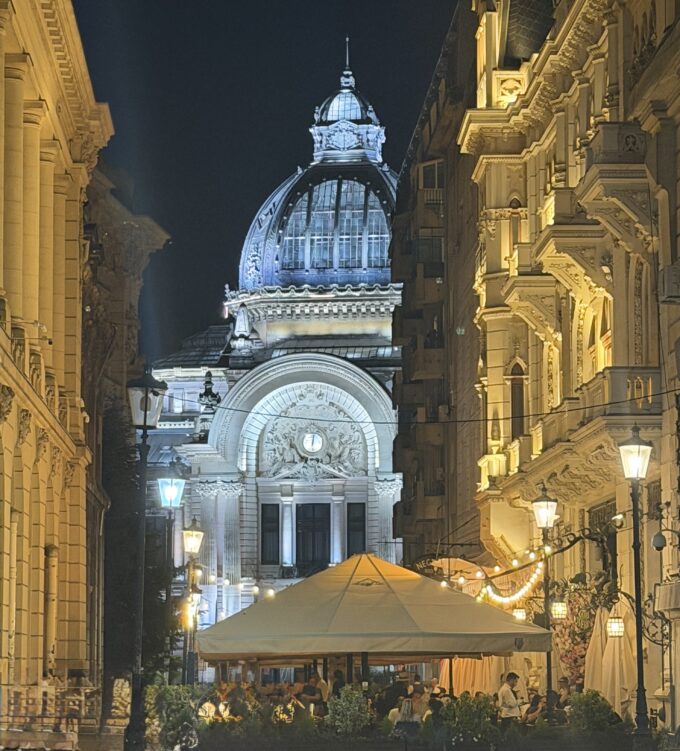
Bucharest, capital of Romania, is a sleeping beauty: a city more promising than I expected with a hopeful but sad mix of elegant decaying villas, fin-de-siecle Paris mansard roofs, early modernist apartment buildings, multi-lane boulevards leading to massive traffic jams at roundabouts, tiny jewel box churches tucked away in back streets and extensive leafy parks. It feels vibrant, on the move, proud and distressed all at once.
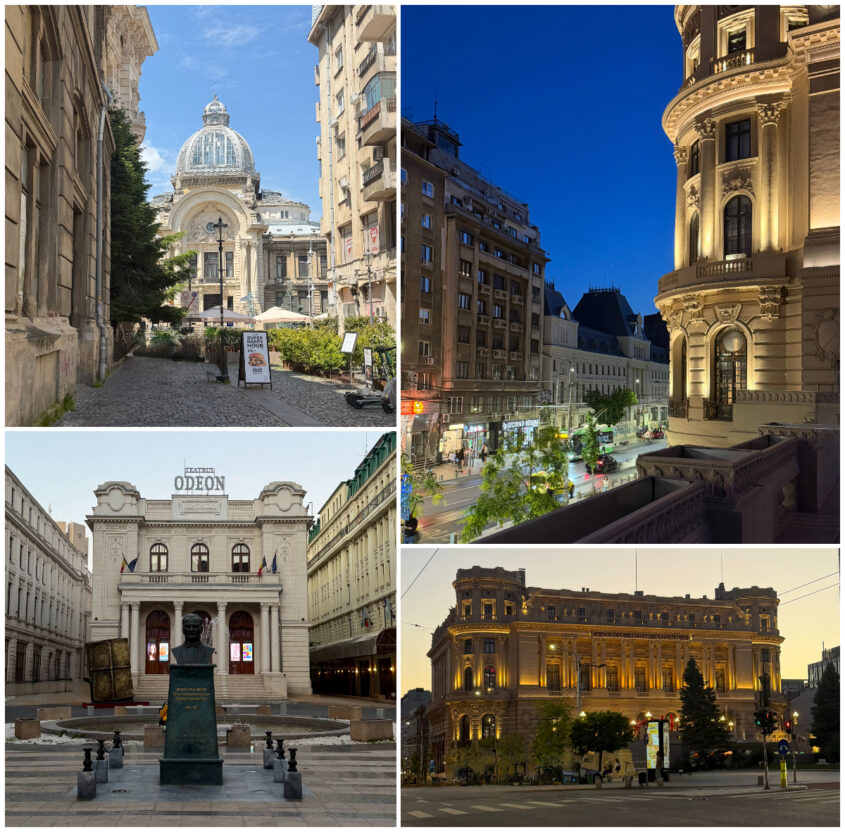
A jumble of old and new – the old begging to be reclaimed. Sadly, some of the huge institutional landmarks – banks, the university complex – built to emulate Paris at the end of the nineteenth century – are now blackened and covered with mesh netting so that the crumbling facade doesn’t fall on your head. Some of the decrepit residential buildings are cheek by jowl with brand new construction, leaving you wondering: how does this work??
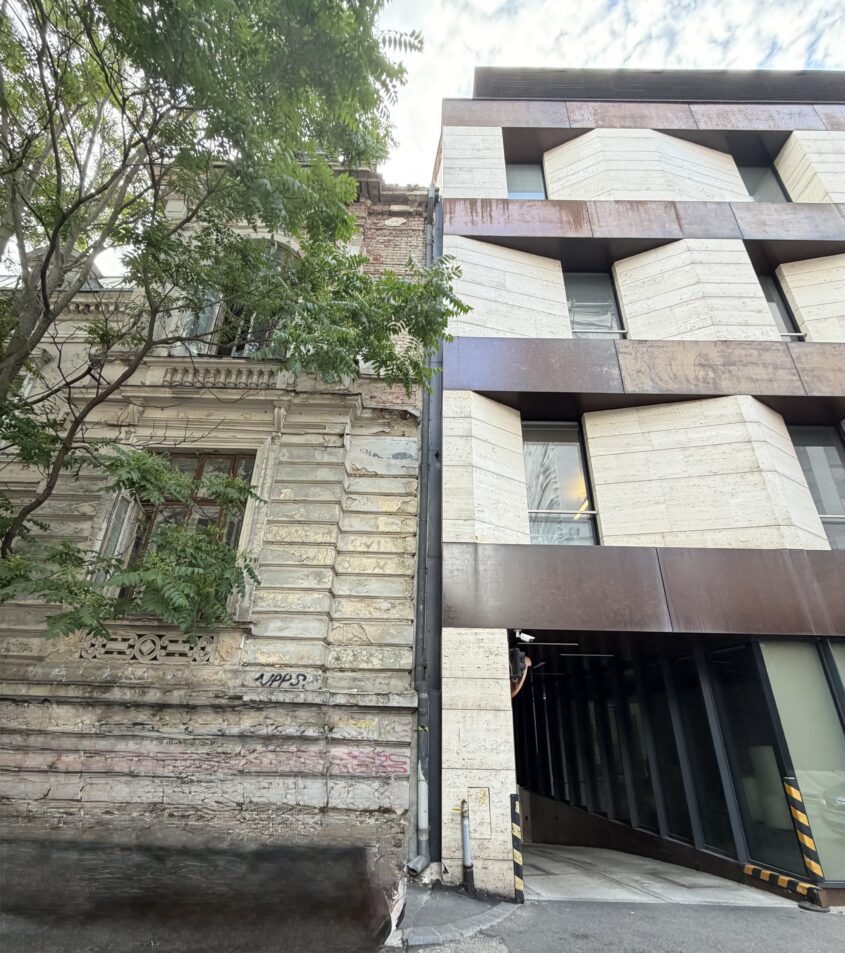
Bucharest is Europe’s earthquake capital, and experienced a huge quake in 1977 that collapsed hundreds of buildings in the city and thousands in the surrounding area, with over 1500 fatalities and thousands of injuries. The number of 19th century buildings in decline, built before modern earthquake requirements, begs the urgent question of what to do with the existing stock of beautiful but crumbling buildings.
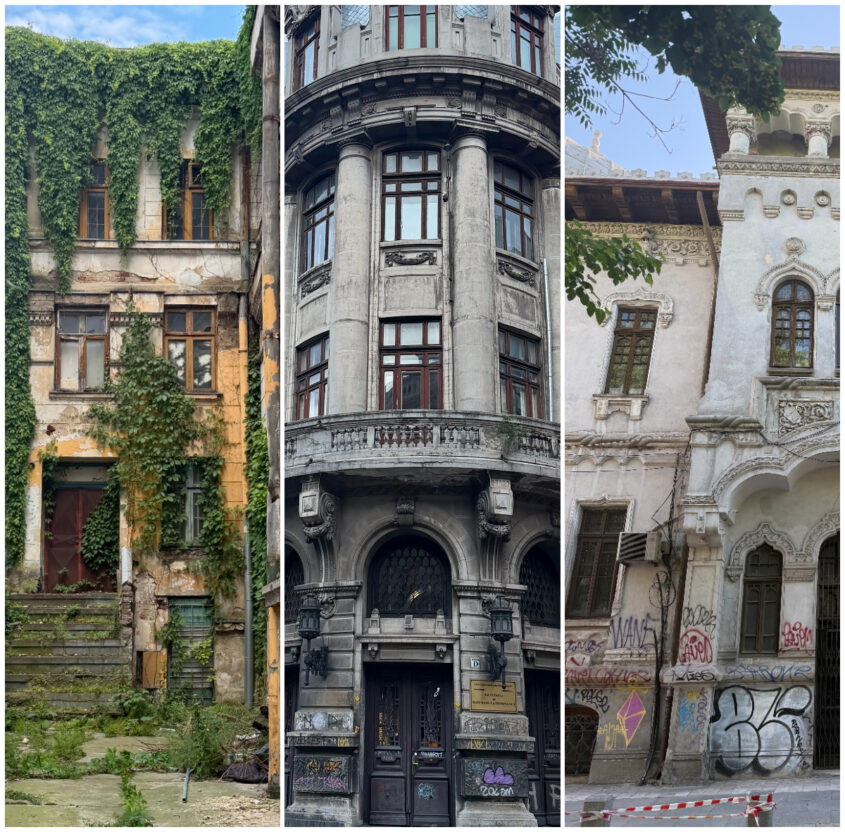
What to do with these broken beauties?
And, as if damage from the earthquake wasn’t bad enough, within years the communist dictator, Ceausescu, razed 2.7 square miles of the historic heart of the city – 25% of the city center – to build the largest, heaviest administrative building in the world – the Palace of the Parliament. If you want to see the damage that a power-mad dictator (who also considered himself a great builder) can do, come to Bucharest. Driving around this atrocity literally made my skin crawl. It’s hard to describe the blandness, presumptuousness, ridiculous scale, and viciousness in wanton destruction; it’s a triumph of venal empty pomposity. (Does this remind you of anyone?) But despite its origins under the hated dictator, it is becoming the pride of many locals. Go figure.
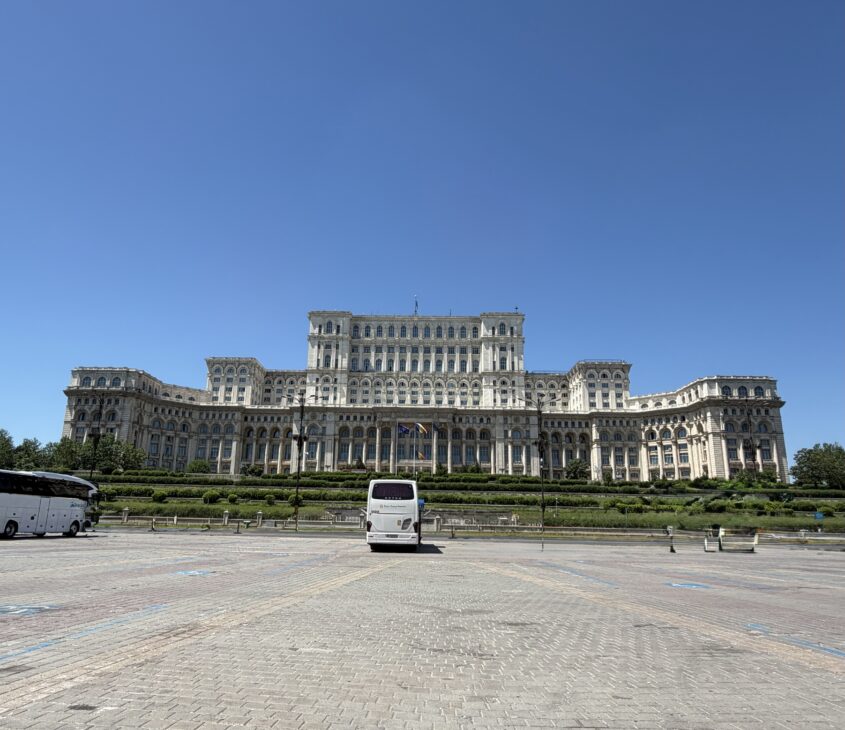
The Palace of the Parliament was completed in 1989. Ceausescu never presided over it.
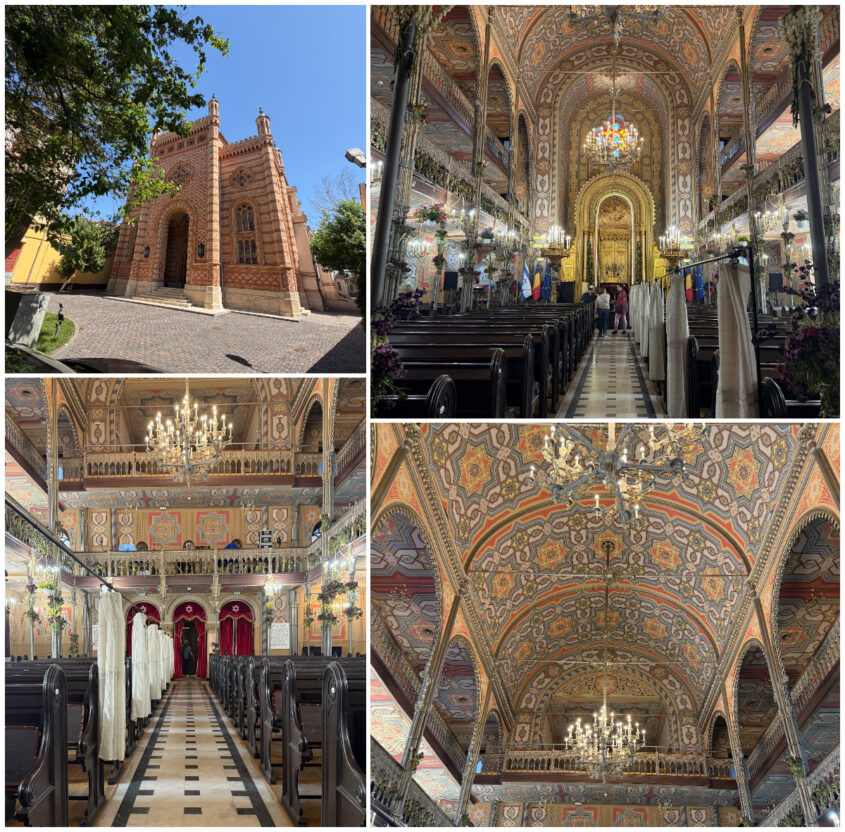
The Choral Synagogue in Neo moorish and Neo Byzantine style is the largest synagogue in the country and one of two still functioning in the capital. Built in 1857 as a replica of a synagogue in Vienna (now gone) it was destroyed in 1941, and restored after World War II. By then the remaining 400,000 Romanian Jews were leaving the country en masse before the exit doors slammed shut under the communists. After a extensive renovation the synagogue reopened in 2015 and the interior, with its arched, intricately painted ceiling, is beautiful. (Below)
Nearby is the Temple of the Holy Union dating from 1836. With the shrinking of the community post-war, (today less than 1,000) it was rededicated as a Jewish Museum in 1968. We happened upon a theatre group rehearsing dance moves for a Yiddish play on the day we visited. The museum offers exhibits of life gone by in the intricately restored space. (Below)
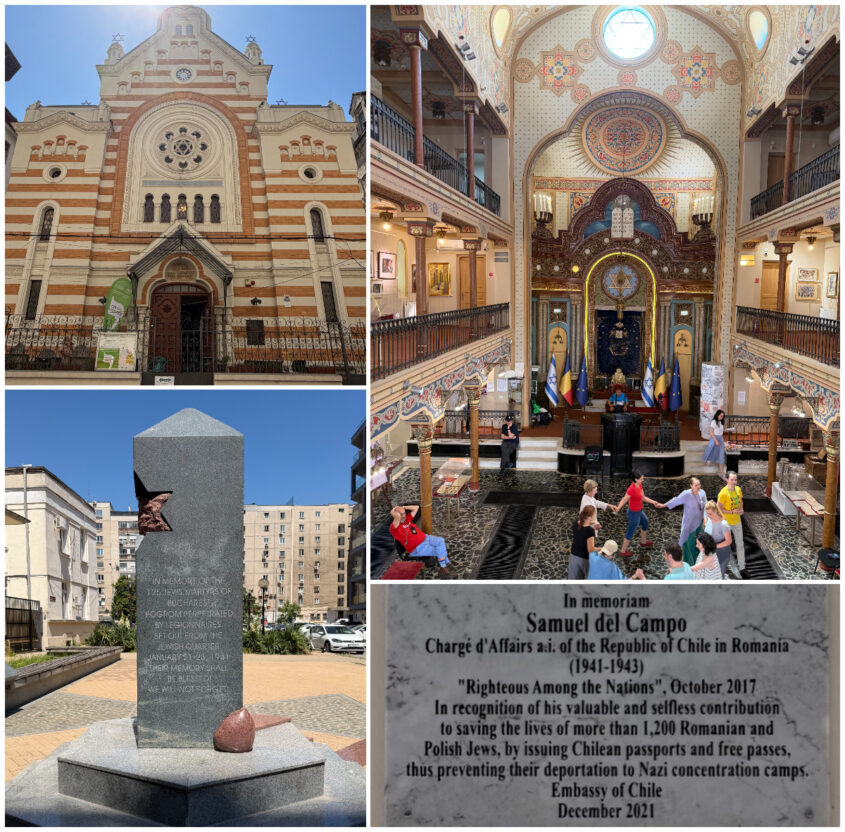
And then there are the memorials – the pogroms of the legionaries were so horrific that they even took the Nazis by surprise.
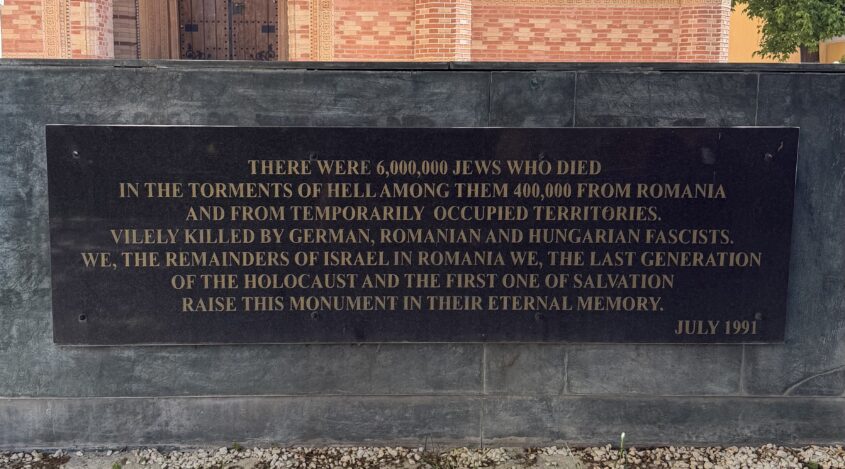
We have seen so many beautiful synagogues, so painstakingly restored, with the sad story of here were many; now we are aged and few. Everyone turned on us – neighbors, fascists, communists, and now we are but a remnant. We exist because of aid from the EU, national monument status, gifts from abroad, various foundations. Who visits? People like us. Curious others. Israelis of Romanian heritage of whom there are many, as the Ceausescu government received money from Israel for every man, woman and child who was allowed to leave.
I am quite taken with the city, despite the intense – even ferocious – history of the last century. There are beautiful details everywhere, especially in the side streets, but you have to seek them out. (Just walk in uninvited; my specialty).
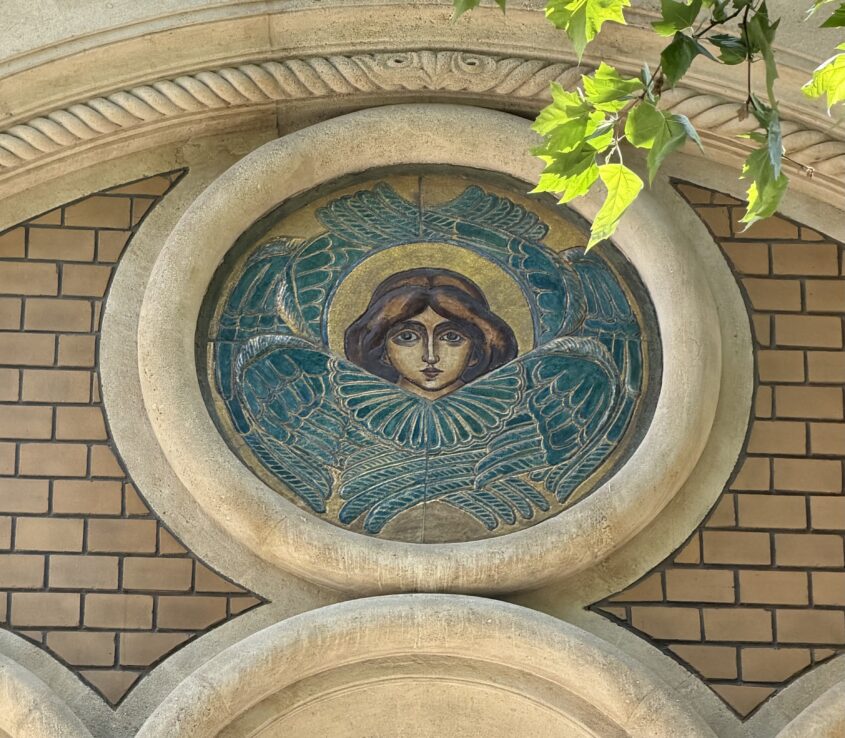
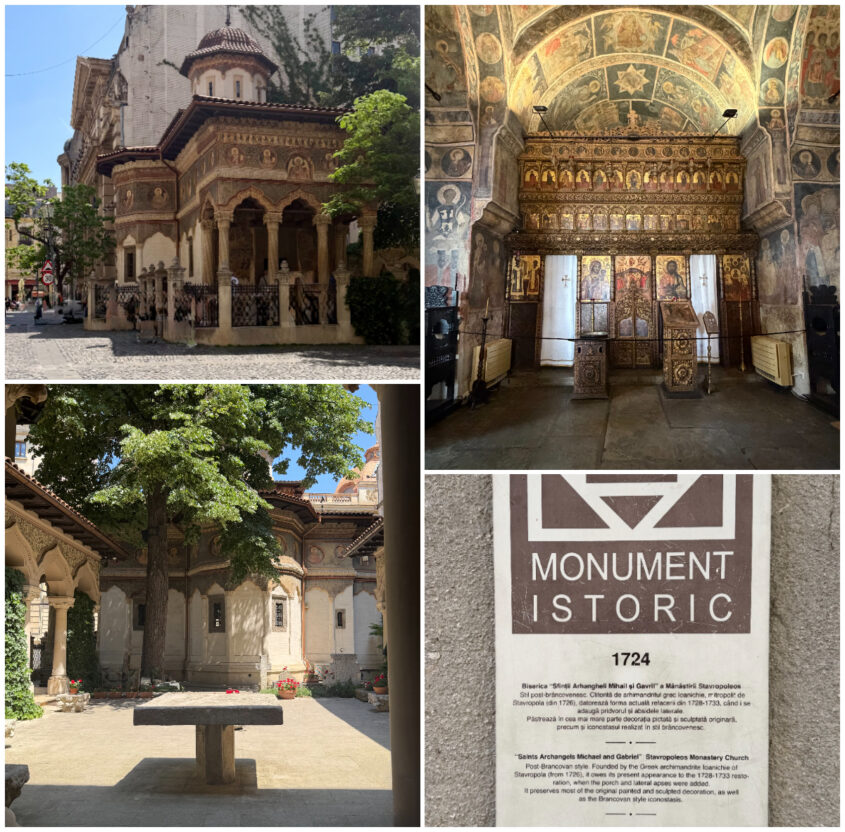
The area of the old town off the main Victory Avenue is cobblestoned and stretches in several directions lined with cafes, shops (many of them tacky) restaurants, and the occasional jewel box church – Romanian Orthodox. We sit for stretches in these churches watching people come and go – not tourists – believers. The door is open in an iconostasis (unusual) and a priest welcomes people who evidently ask for a blessing. Much kissing of icons, multiple signs of the cross. Several priests on the street, bearded, their hair tied up in a ponytail. People were denied religion for 45 years; they’re into it.
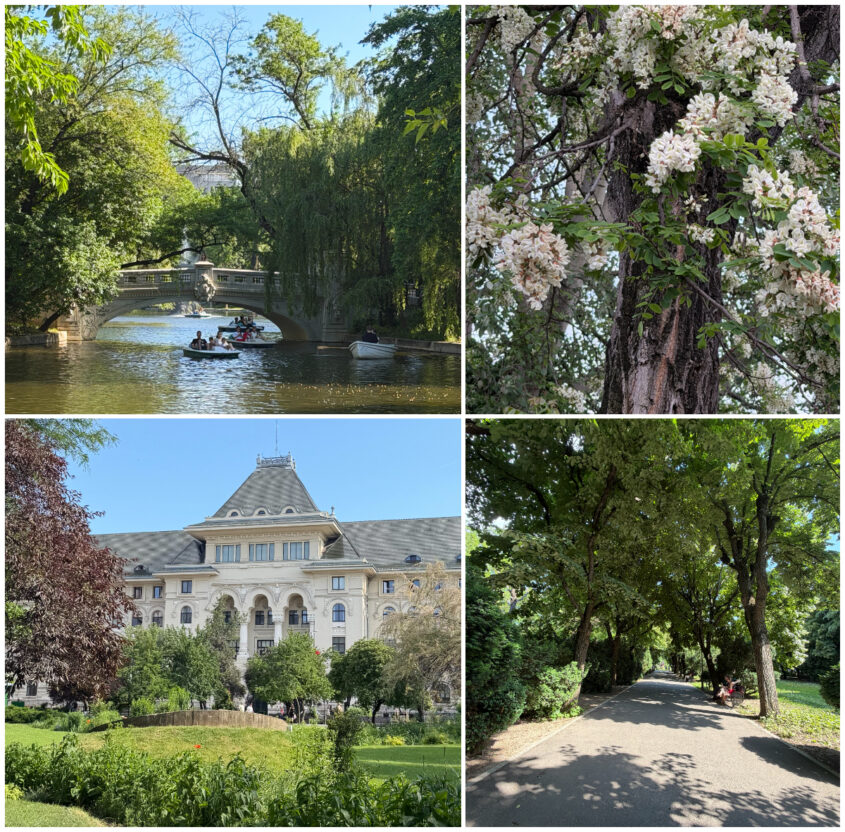
I go for a long walk in Cismigui park which I found almost by accident, meandering through a neighborhood of aging houses bordering a lake, rose garden, playgrounds, walking paths, an alley of Linden trees (my allergies in full swing). Old timers sit on benches; mothers push prams, kids roll by on skateboards, students from the nearby music college stroll through with their instruments.
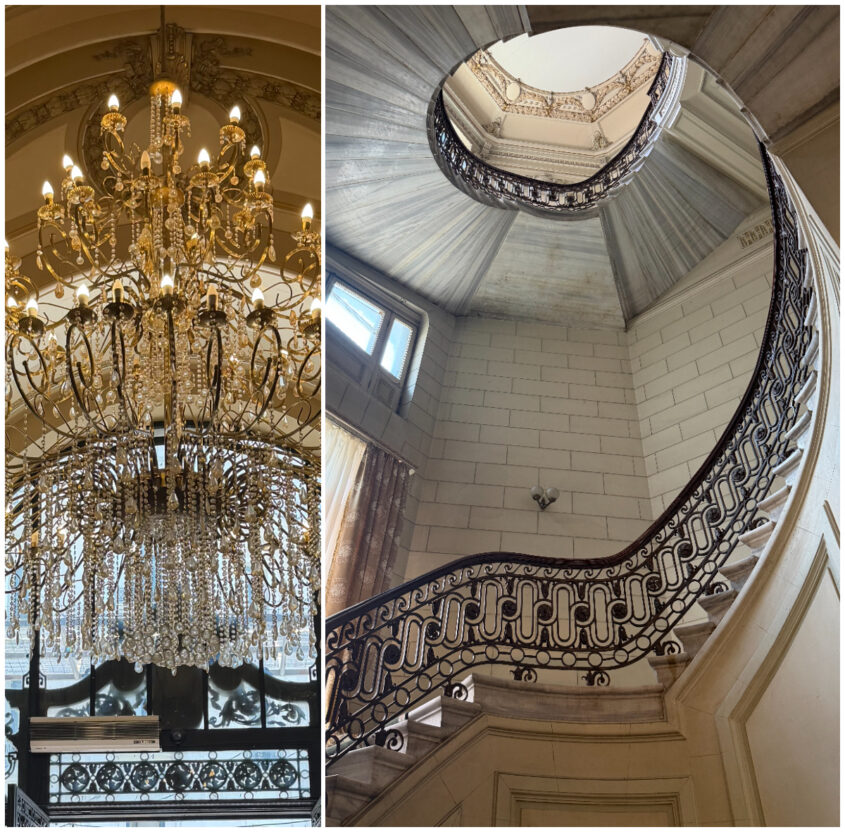
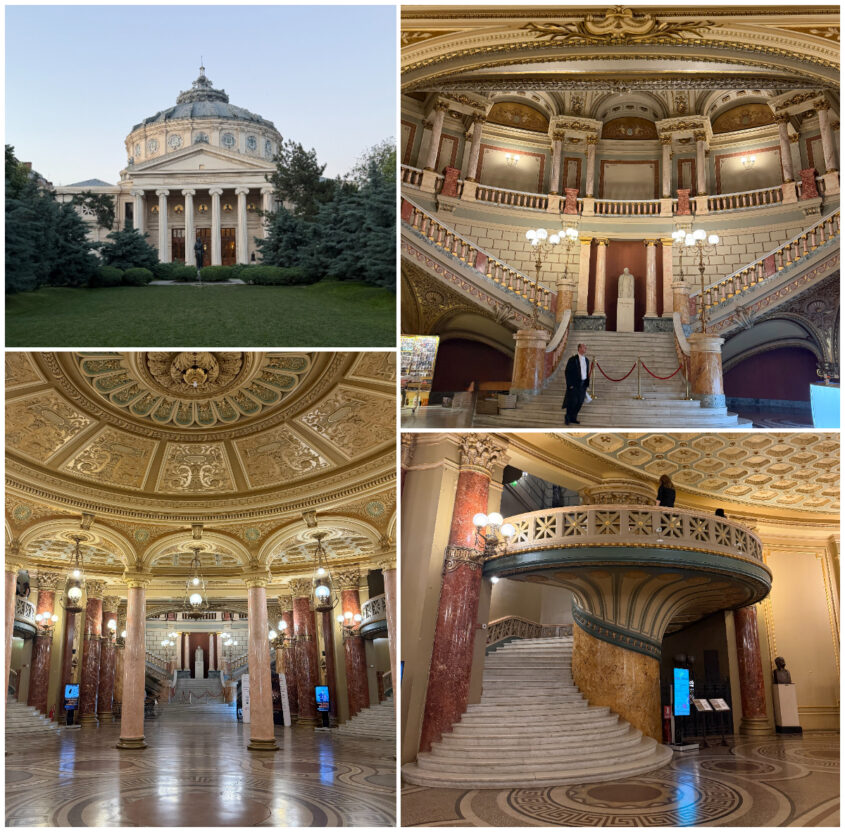
Just next to our hotel, the Athenee Palace, is the Atheneum – the premier concert hall of Bucharest, built in the 1890s and completely reconstructed in 1992 to its original glory – to the tune of 9 million euros. It’s closed to visitors unless you slip in for a moment while concert goers are exiting. And worth the effort.
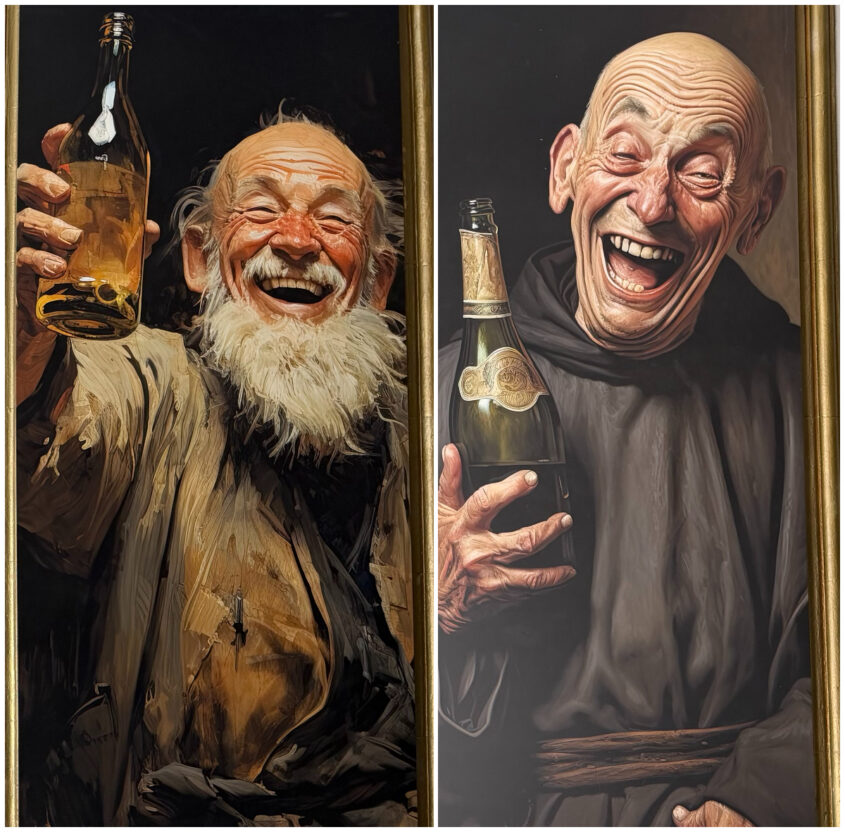
The weather turns hot – in summer it must be baking – and evenings are full of people eating and drinking in sidewalk terraces. (Afternoons full of people eating gelato). And a sense of humor – among the graffiti there are hilarious posters, imprints, exhortations and adverts.
Given that it’s May 2026, (year 2 of the Trump administration, month 3 of the Iran war) I expect to see anti-US and anti-Zionist graffiti and exhortations. None. Nada. Everywhere people were delighted to welcome us. They have bigger problems and the US is not top of mind. Russia looms much larger as it’s practically next door. Romania shares a 400 mile border with Ukraine, the Russian navy is just around the bend in the Black Sea. The morning that we leave for the airport there is news of a Russian drone that hit an apartment building in Galati, a port city on the Black Sea close to Ukraine, injuring two people. Romania is part of NATO, jets are scrambled.
Next up: parting thoughts; where we stayed; what we ate, and kudos to our wonderful guides.