And we’re off to Brasov – considered one of the prettiest cities in Transylvania – via a meander through old Saxon villages with their unique fortified churches. 800 years of Saxons in Transylvania came to an end after WWII, when they were vilified as Nazi collaborators and deported en masse. Those who were left were “ransomed” – or actually sold to West Germany (priced per person) which became one of Romania’s sources of foreign currency.
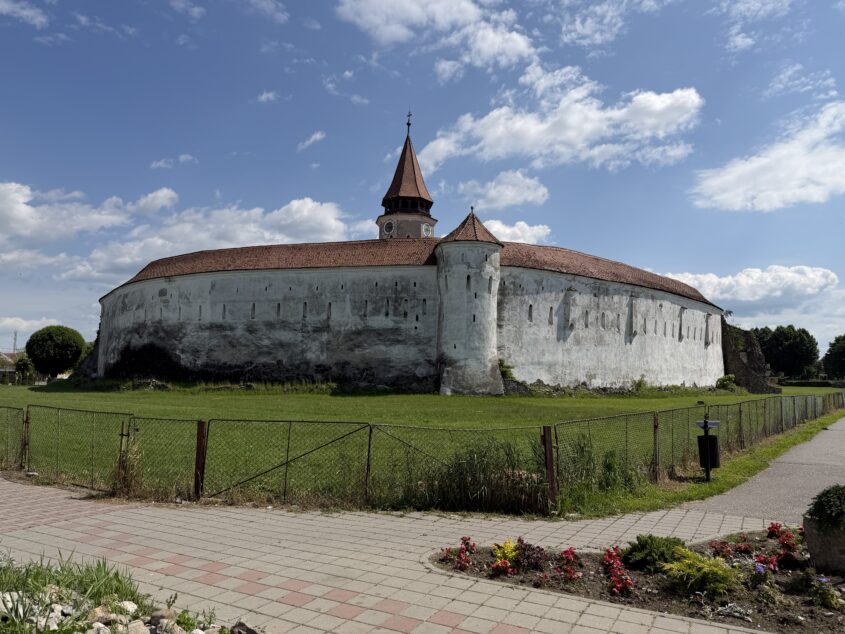
Prejmer, an original fortified Saxon church, completely encircled by an outer wall, a UNESCO World Heritage site
After 1989 these centuries-old villages with their fortified Lutheran churches fell into disrepair. Many of the Roma moved in, and – on this Sunday morning – are gaily turned out in their go-to-church best – wearing flowing skirts, black fedoras, high color kerchiefs.
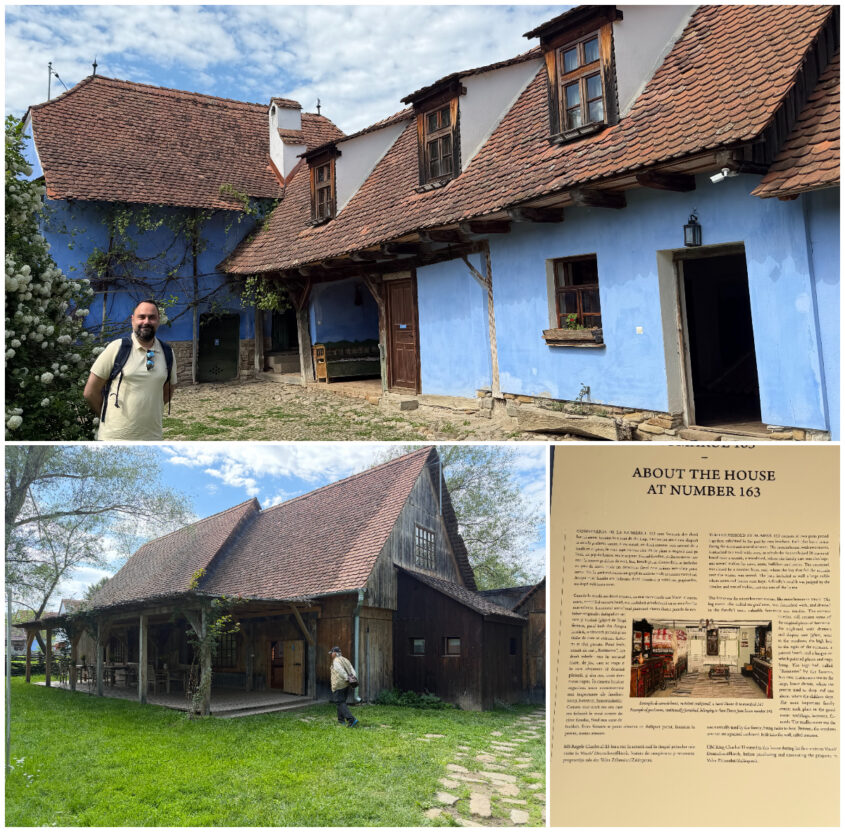
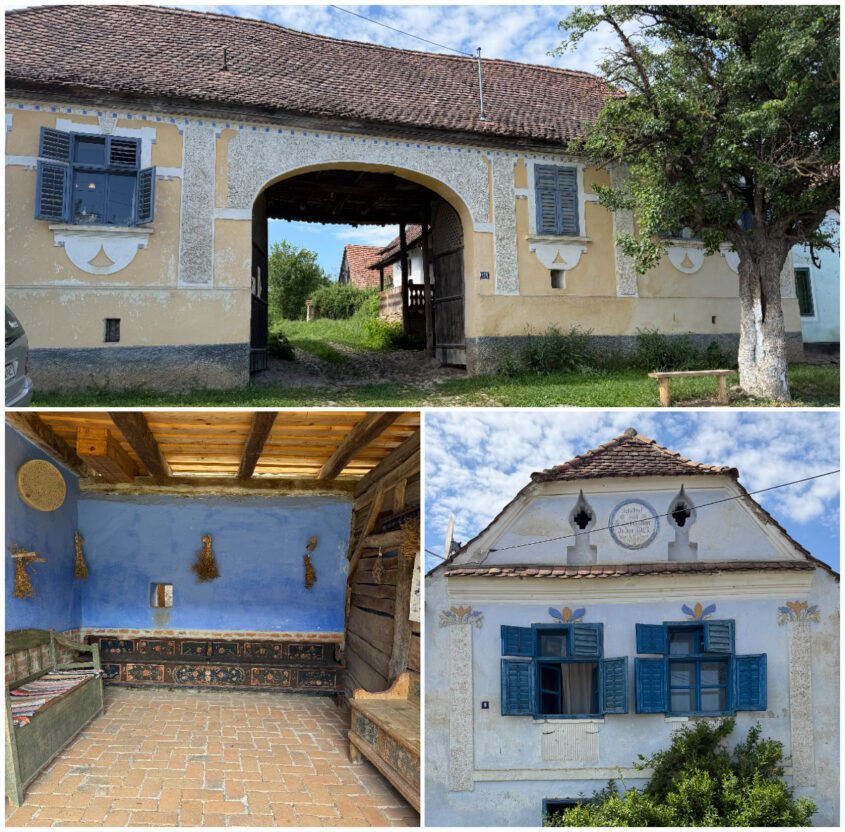
For the past twenty years, the villages have undergone a resurgence, as the country tries to recover some of its folk heritage. Much of this is thanks to Prince (now King) Charles of England who took a fancy to the traditional architecture and sustainable farming methods and purchased several properties which he restored to their original state, managing them as part of the King’s Trust. The most famous of these restorations is in the village of Viscri, population 450, and is in apparently in danger of being overrun by buses and tourists. While we are there, however, there’s hardly anyone but chickens, cows and a few local tourists. We have the King’s house museum to ourselves, restored with handcrafted local materials. Impressive. Will it save the villages?
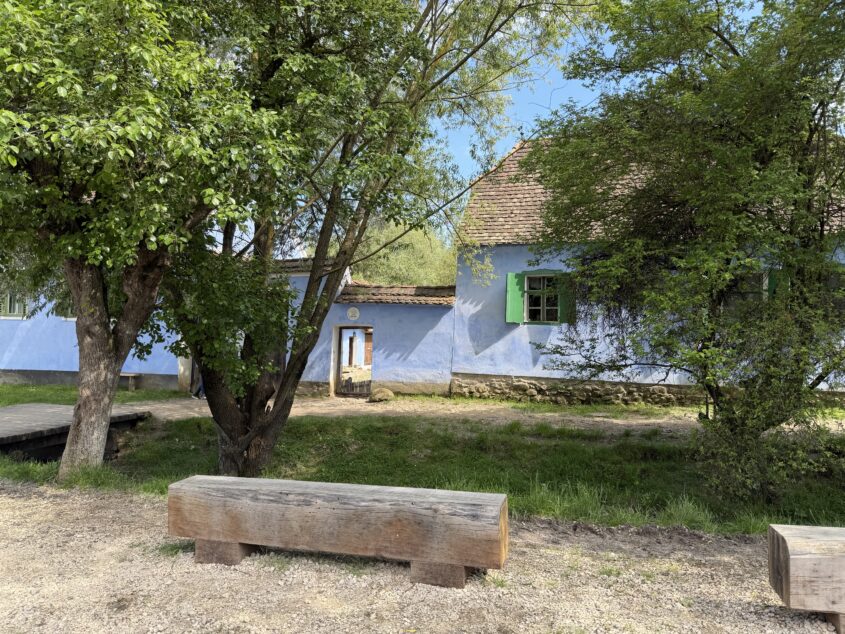
The King evidently rents out some of these properties for well-heeled tourists who want to experience traditional life, but Andrei, our guide, assures us that those who sign up are gob-smacked when they arrive by how humble it is, and immediately regret it. The dirt road approaching is rutted and slow, and I have no idea where tour buses could even turn around, much less park, but evidently they show up. Thankfully not while we’re here. Take a look below.
We stop in Sighosoara – one of the more famous fortified Saxon towns – with a towering citadel high on a hill, several churches, a famous clock tower with tiled roof in many colors, steep access (no cars) and rumble-stumble cobblestone streets up and down. There’s a pretty town center with cafe tables under spreading chestnut trees and, for the first time, I hear American voices. A UNESCO protected site with traditional narrow houses, flowering plants and shops selling local crafts (and kitsch), the town is a little too cute, and my tourist phobia is about to get the better of me.
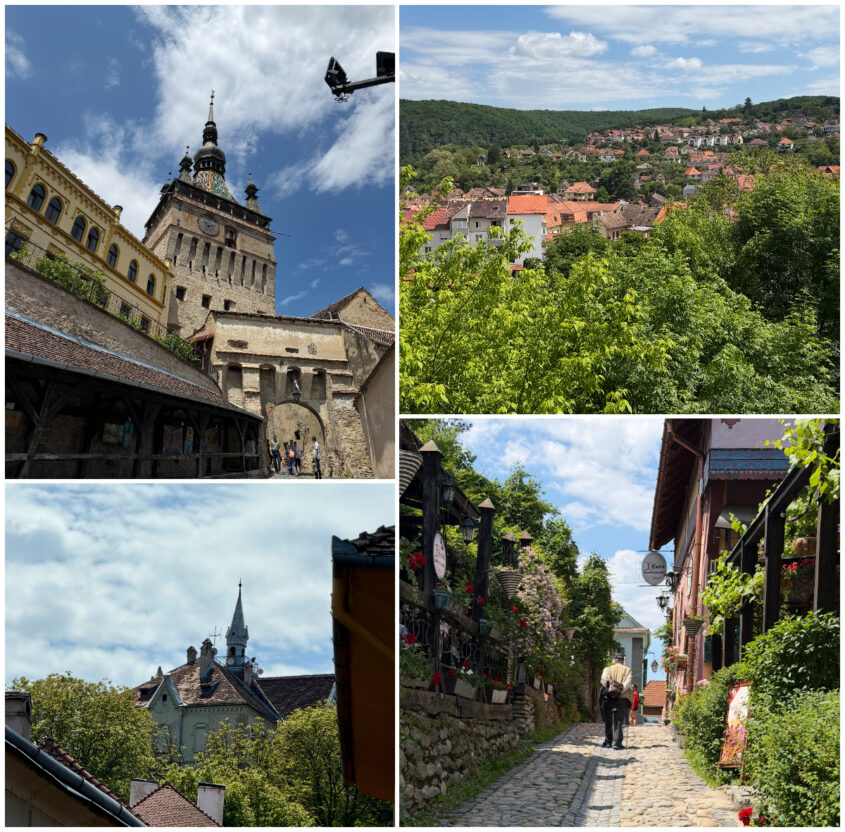
It seems a far cry from its medieval days as a fortified Saxon Citadel built to repel Ottomans and Tatars, but that is the fate of pretty much every hill-top town in Europe. I am glad that I did not indulge the guidebook and consider staying the night, although I suspect that once the day trippers leave, it’s quite charming.
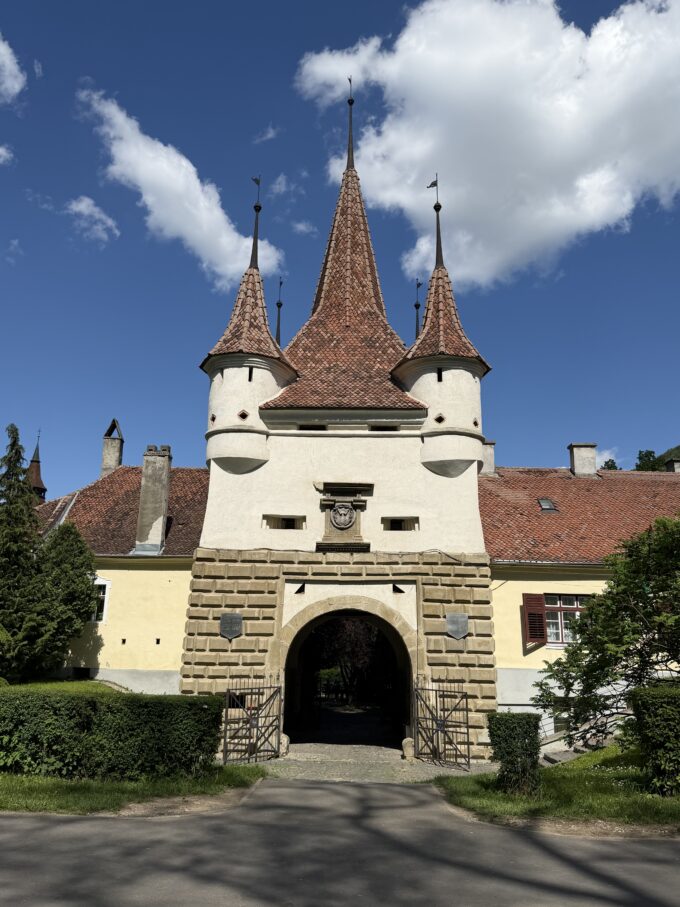
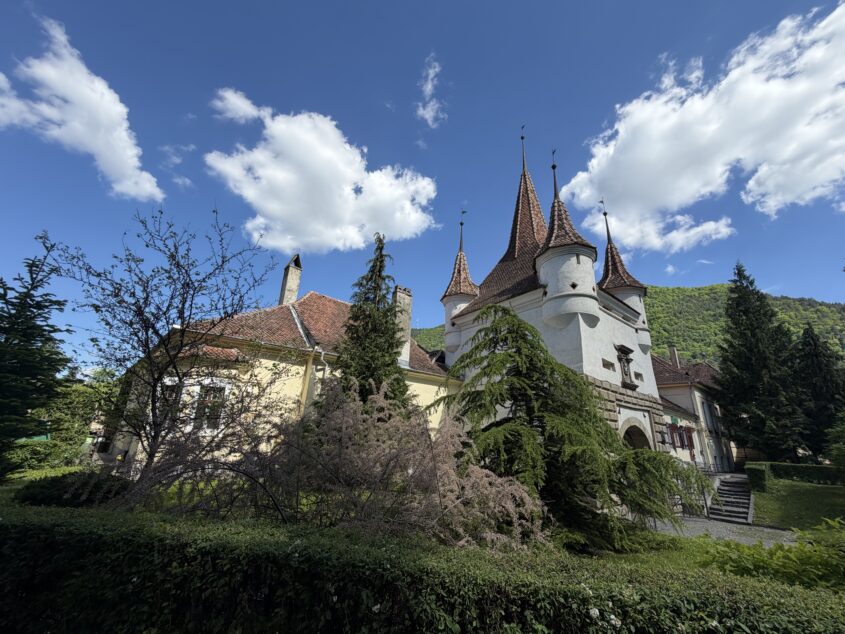
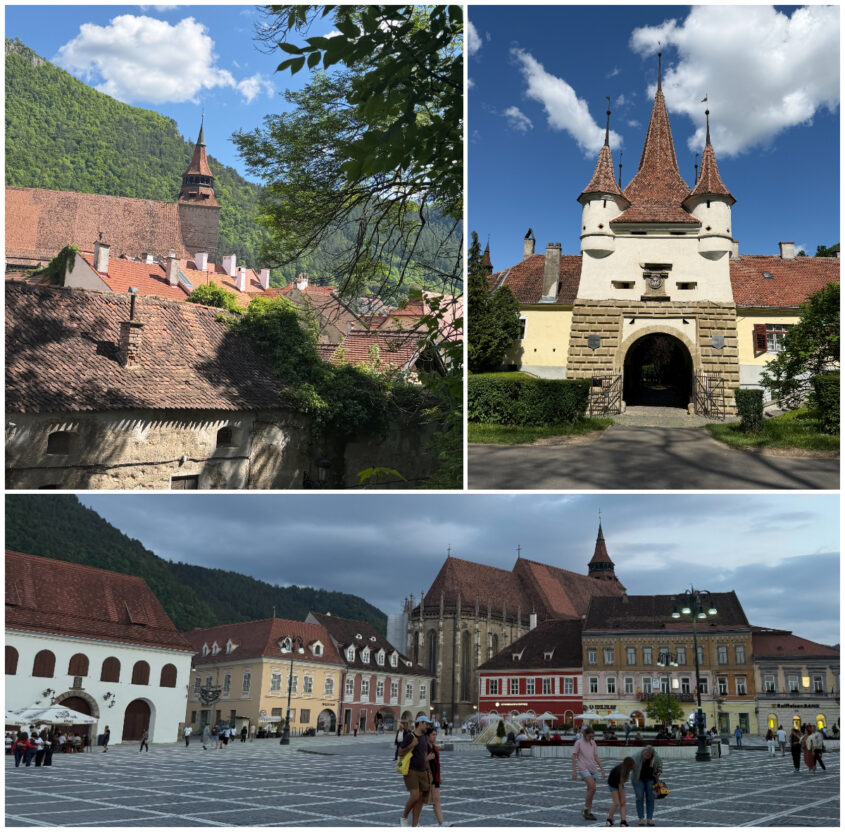
The city of Brasov is one of Romania’s highlights and it knows it. Another Saxon town (formerly Kronstadt) set at the base of a chain of mountains, the entire center is pedestrian only with a large central square surrounded by restored townhouses and churches. The original city walls are largely intact and alongside is a parklike path meandering along a running brook. (I’m so charmed.) True, the walls are covered with graffiti which destroys the vibe, but the few remaining ornate gates (below) restore the original effect.
We stay in the Schusterman ‘Boarding House’ (a lovely restored townhouse) with a rooftop view over the city. Over the next few days we enjoy several pleasant dinners in the old town, after roaming the back streets with a mix of restored townhouses and buildings in decay. It’s an odd look for us Westerners for whom everything is – sadly – external appearances. Again, we are assured that within the outward decay, the apartments are totally modernized. No one wants to take on the cost and obligation of common maintenance? Common, communal – evidently a bad word – the Communist hangover of anything ‘communal’ is tainted. But it’s also expected; let the local authorities take care of it, as they always have.
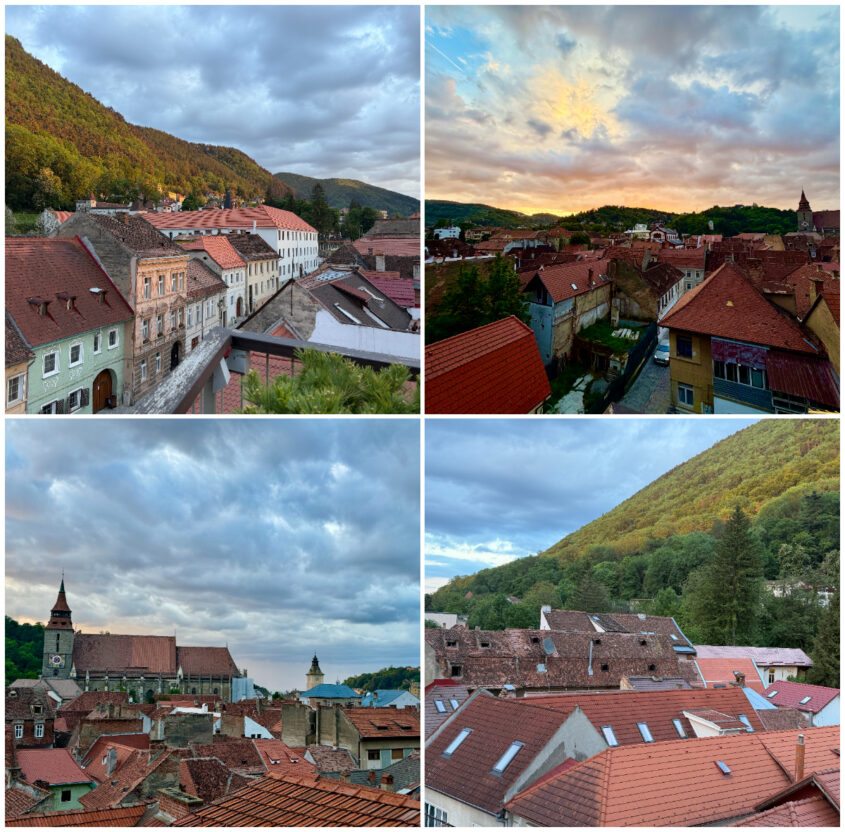
Views of Brasov from the Schusterman rooftop. Note the very new and very old tiled roofs.
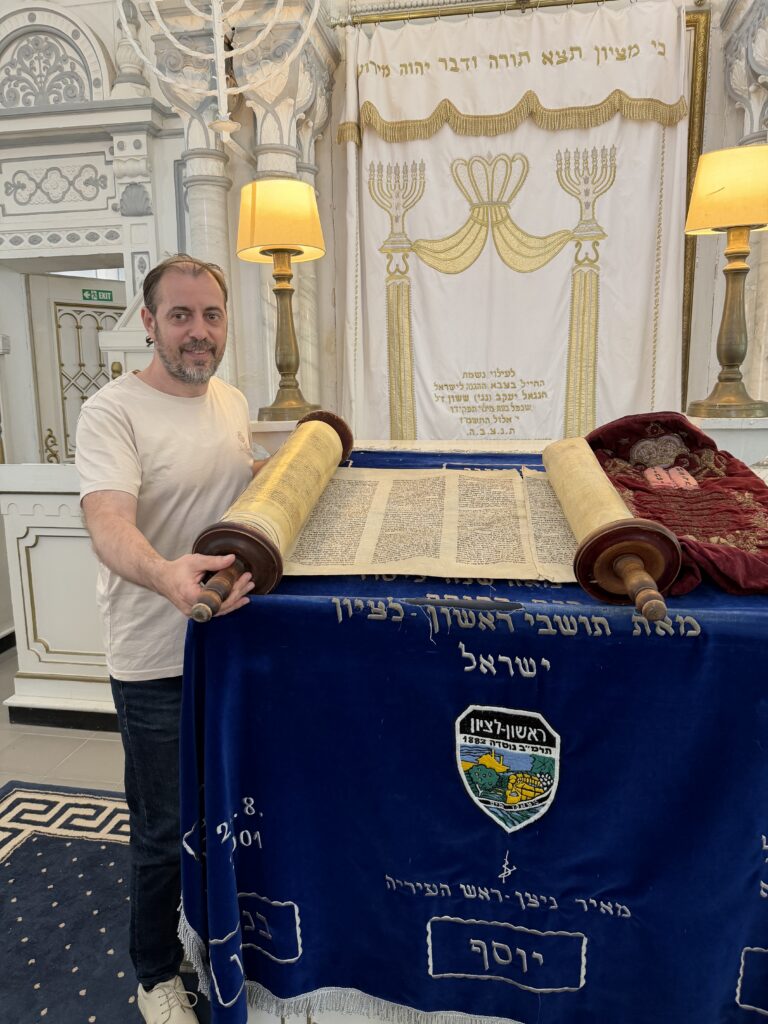
We visit the Beth Israel Synagogue – another Lipot Baumhorn architectural beauty in the Neolog style. Lovingly restored and rededicated in 2001, it’s used by a community of 225 members who own the buildings on either side – a community center and a kosher restaurant. While we are there a very old Torah is open on the bimah – not a sanctified Torah but one of five found in the basement of a man who had saved them during the Holocaust. He survived, married a local (non-Jewish) woman with a son, and when he died, her son found them in the basement. Because the son was not Jewish he was able to sell them to the community. (Jews can’t sell a Torah.) The Gabbai (photo) tells us that they are raising money to take the Torahs to Israel and have them cleaned, repaired, and re-sanctified.
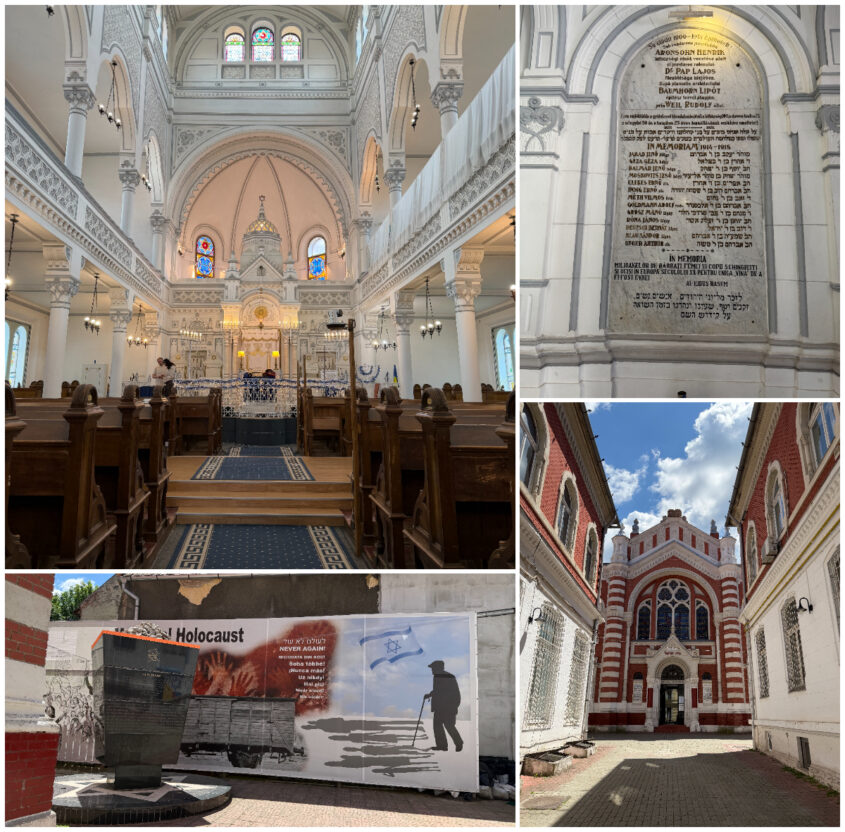
Beth Israel Synagogue and community center complex.
One of the must-sees from Brasov is the Bran castle – aka Dracula’s castle – and our first taste of mass tourism. The line to enter snakes around the courtyard and the temperature starts to climb. Most of the visitors are local, with buses of Asian tourists, and we decide instead to meander the grounds and look up, up, up at the hilltop fortress in pleasant quiet contemplation. Dracula is a made-up character (Bram Stoker was an Irish writer who had never visited Romania), based loosely on stories of Vlad the Impaler, who mostly impaled Ottomans (of course!) and other perceived bad guys. No matter. It’s one of the major tourist $$ intakes in the country and the entrance fee is no joke – $60; many times more than anything we’ve paid. (The site was recently purchased and is currently managed by the company that runs Graceland. Globalization in action…).
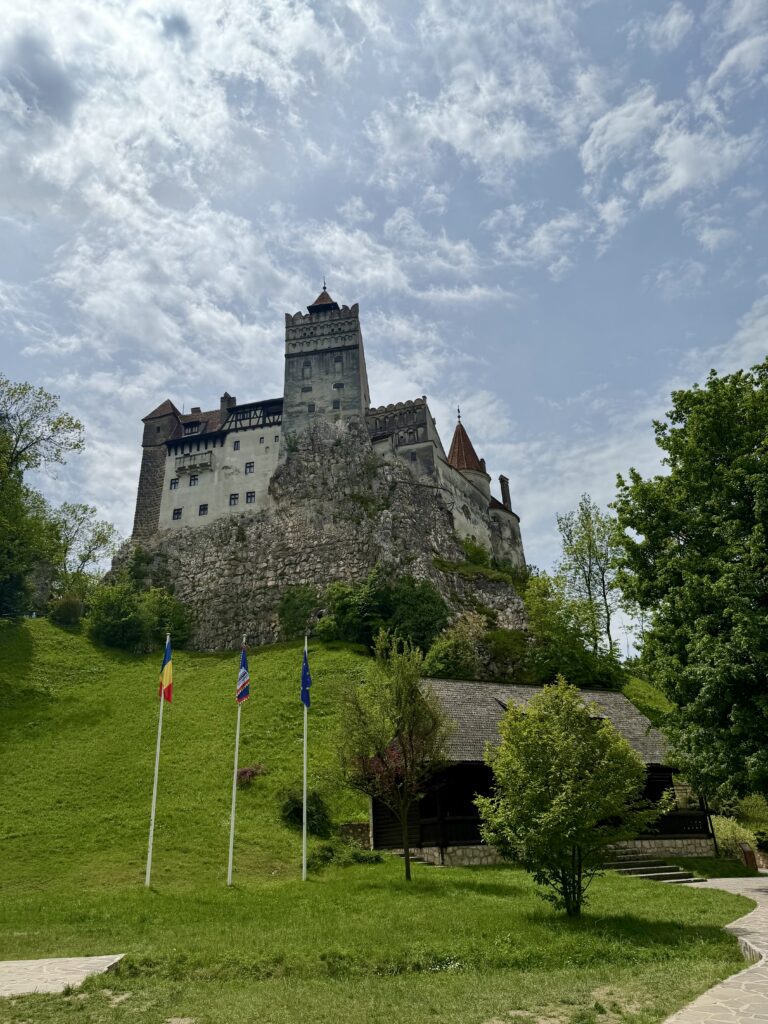
The castle is the opposite of ADA accessible, but people are undeterred. With canes, in wheelchairs, pushing strollers – old and young tramp up the steep ramps and wait single file to enter the narrow staircases within the castle (actually a fortress – not much in the way of a traditional “palace.”). We decline the offer, (evidently there is very little to see, and once you’re inside you’re stuck in an unmoving, very hot, line.) Instead we head off to Prejmer, one of the original Saxon fortified churches where there are exactly no tourists and the site is amazing.
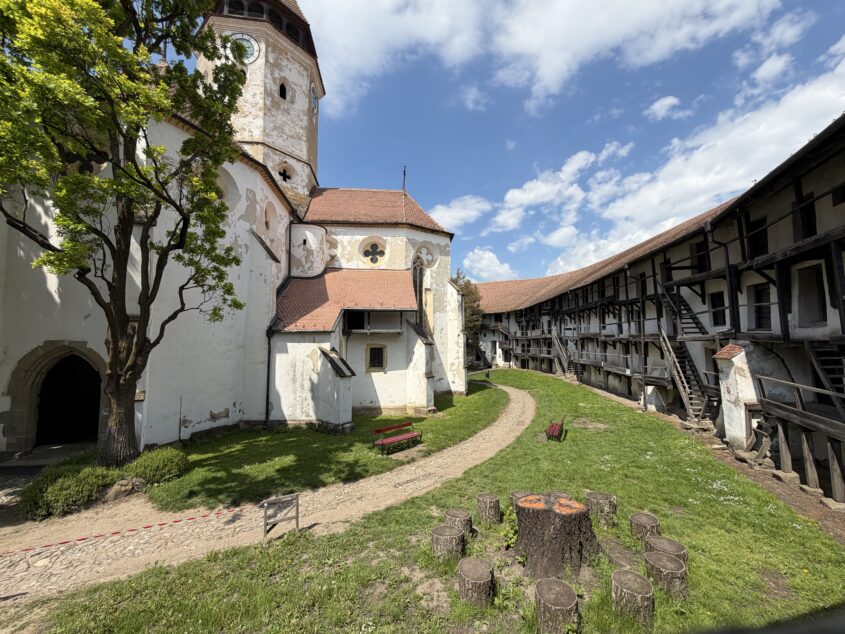
The inner wall of the fortification with rooms for each family in the village.
Fortified churches are just that: If the village was under attack (by Ottomans, Romanians, Hungarians or some chieftain who was mad at you) the entire village took refuge in the church, which stood in the center of an inner wall surrounded by an outer wall. The outer wall – the scaffolding and ramparts still in place – was for defense, while the inner wall held individual numbered rooms (like a motel!) for every family in the village; along with a school, barns for the animals, caverns for winemaking and food storage. Ingenious. The entire village could live in the shelter of the church throughout an attack and life would go on. The church itself is still in use – Lutheran and sparse – with an original triptych altar painting – one of the oldest in the country.
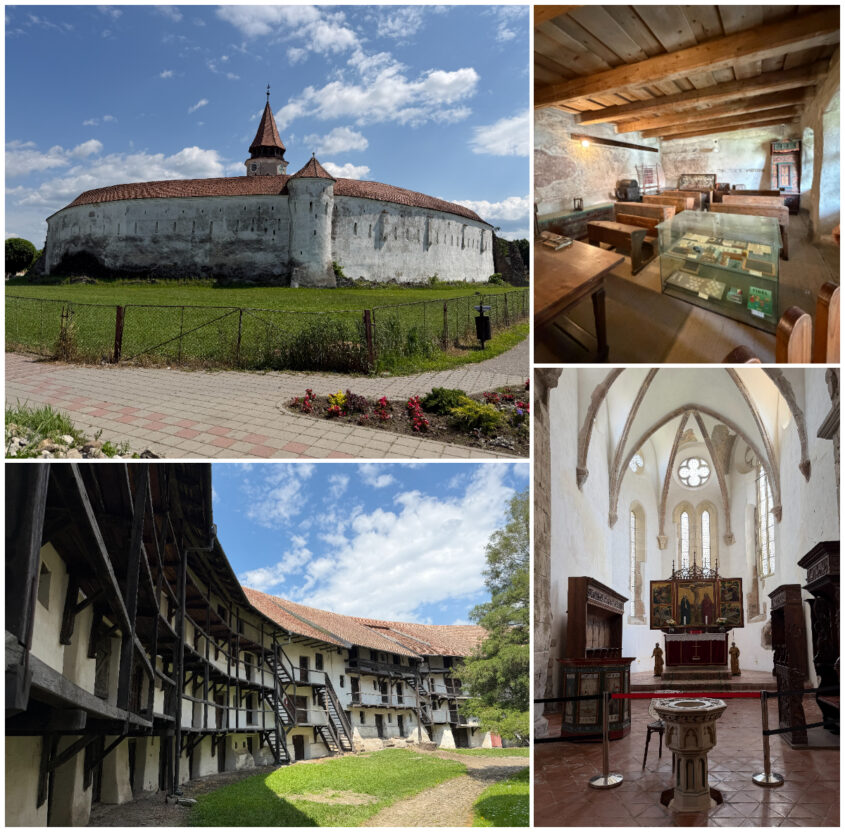
Prejmer is one of only seven fortified churches (UN heritage sites) left in the country and one of the best preserved.
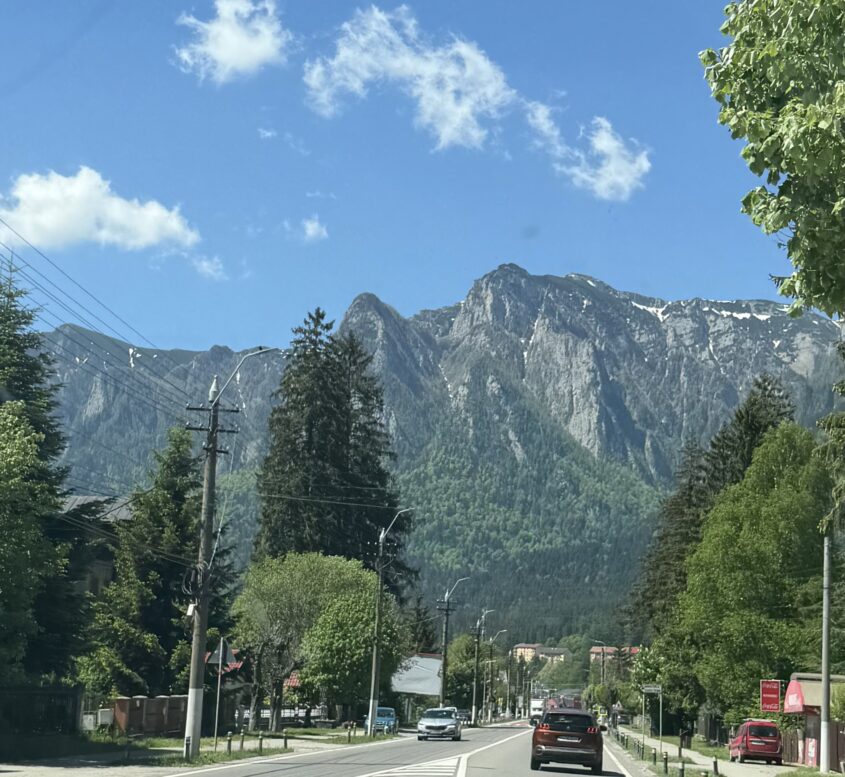
Brasov is delightful – almost as lovely as Szeged and Plovdiv, but it’s time to cross the Carpathians and head south.
Next up: Bucharest.