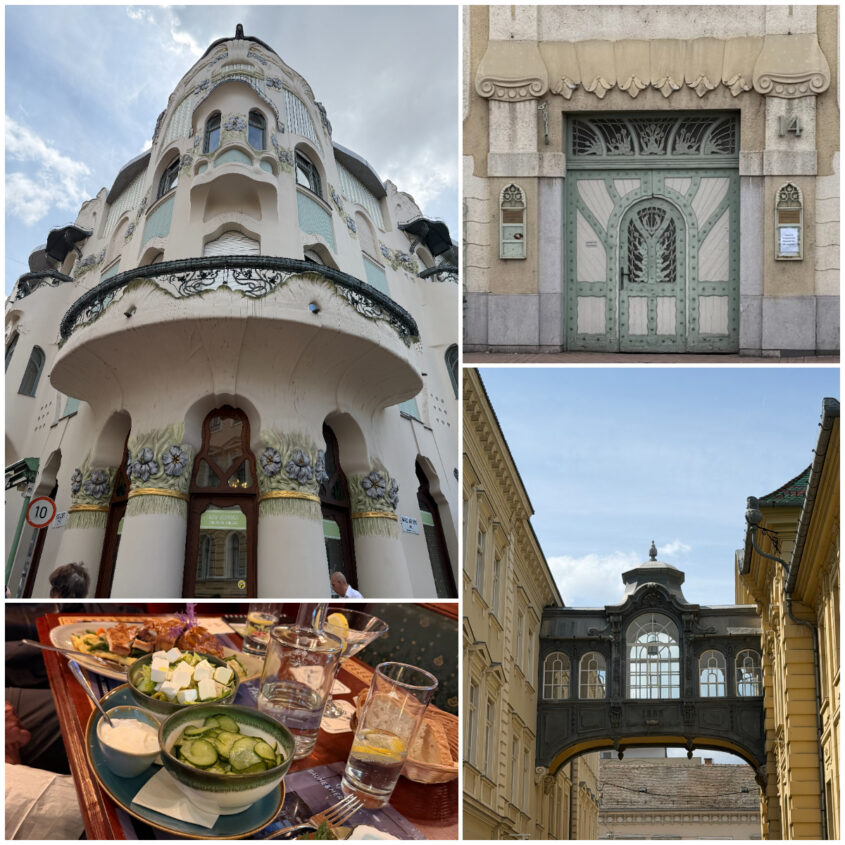
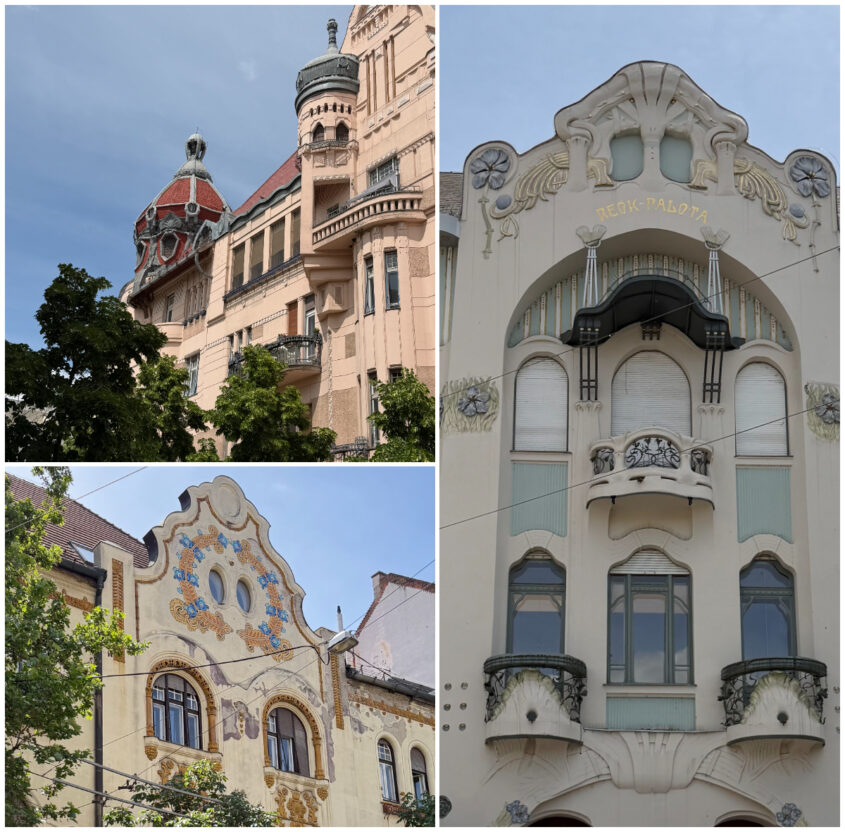
And finally we arrive in Szeged, southeastern Hungary, the country’s third largest city, population about 175,000. I love it immediately – a small university city spread out along the banks of the Tisza river – with leafy parks, a pedestrian center, Art Nouveau buildings and a gentle, livable vibe. The city was virtually destroyed after a catastrophic river flood in 1879 and was rebuilt and designed at end of the century at the height of Secessionist (Middle Europe’s version of Art Nouveau) exuberance. Along with Subotica and Novy Sad (from which we just arrived) it sits prominently on this Secessionist architecture trail.
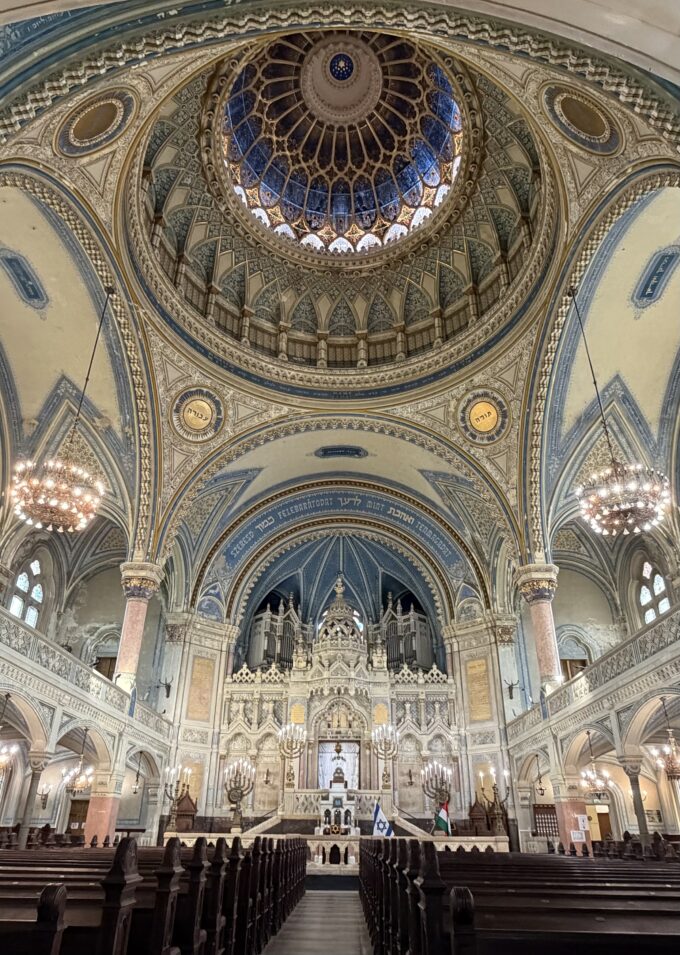
Pride of place goes to the New Synagogue designed by Lipot Baumhorn, with stained glass work by renowned artist Miksa Roth. Commemorated in 1909 and built in Neolog style – the Hungarian version of Reform Judaism. (But there are still balconies for women). The pre-war Jewish community numbered only 8,000 but it was sufficiently prominent to own this stunning complex of synagogue, school and adjoining community center taking up an entire city block. We are one of only two sets of visitors, to my astonishment. It’s beautifully maintained with extensive descriptions of the architecture, symbolism, design. And of course – with memorials and photos of round-ups and deportations. As with almost everywhere in Central and Eastern Europe, the Jews are gone; the buildings lovingly restored and presented as National Monuments.
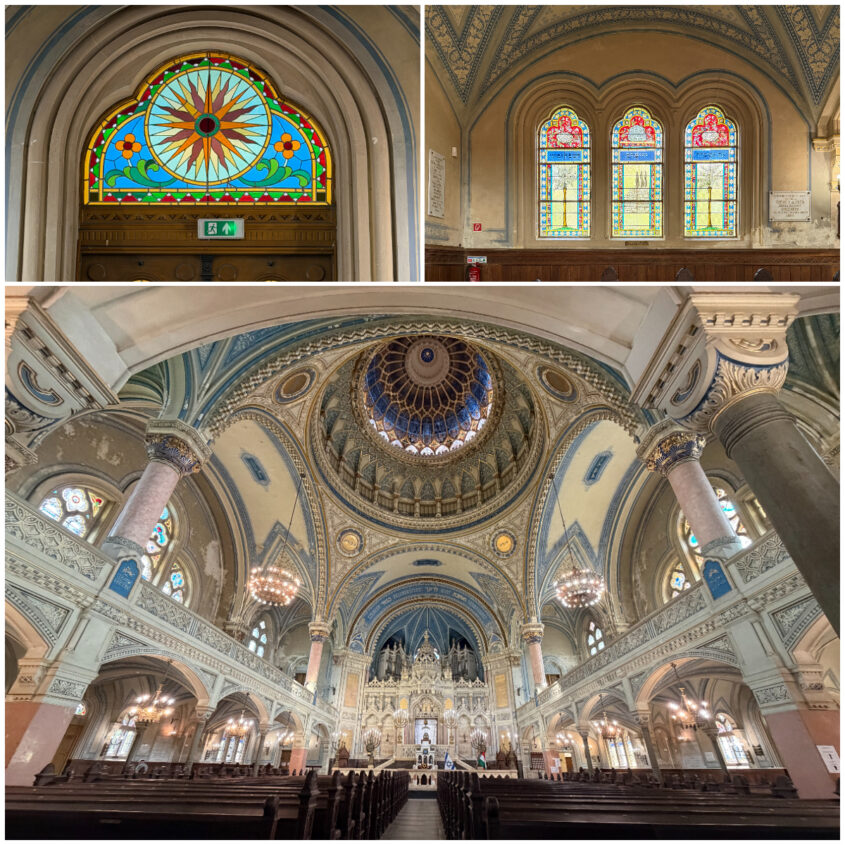
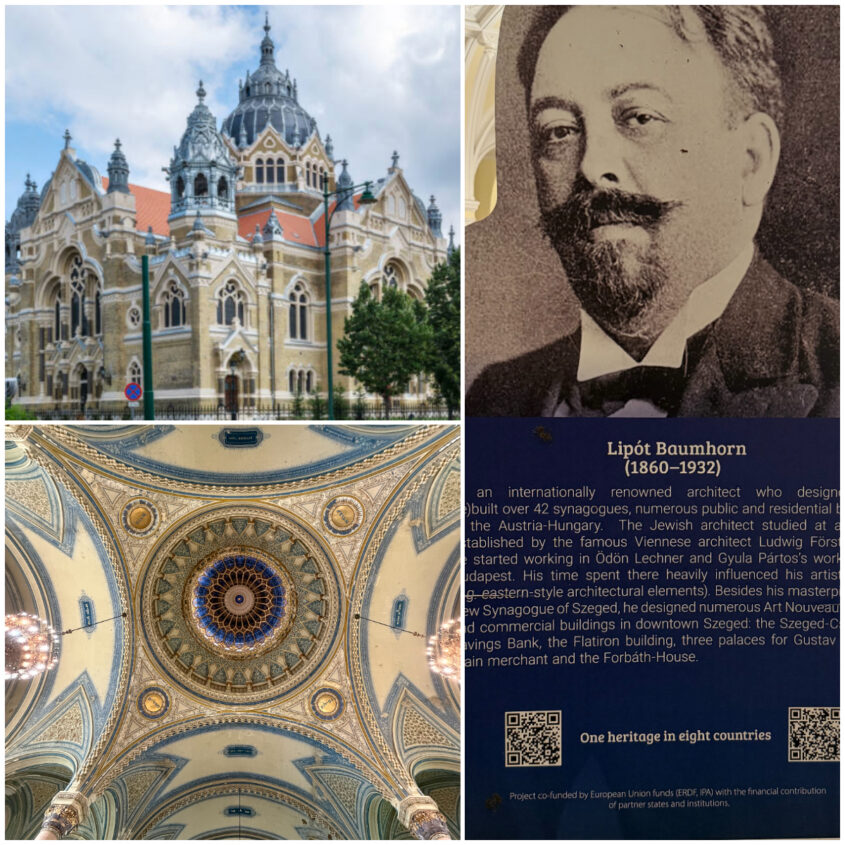
Quoting from the architectural description: ” …the New Synagogue represents the architectural expression of the Hungarian Jewish aspirations for equality … using space-shaping structures in a grandiose way, evoking the dome of the Florence Cathedral…. powerfully expressing both identification with their country and the triumph of Hungarian Jewish existence.” (Alas…)
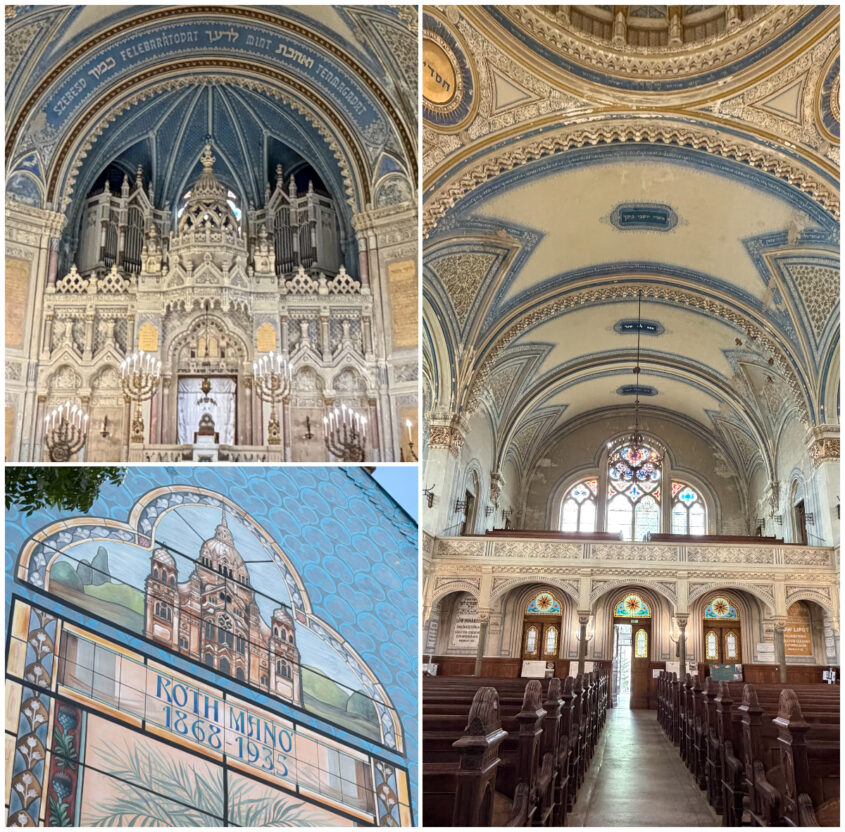
The community today numbers 300-400, but – we are told – remains active. Unlike Serbia, Hungary was an ally of Nazi Germany and hence was not occupied until 1944. Until then, under Horthy’s government Jews were severely restricted in occupation and movement, and most Jewish men had been conscripted to hard labor camps (in which many died) – but it was only in 1944 that the round-ups and deportations to death camps began. And very thorough they were. Of the original 8,000 a few hundred returned. And most did not welcome the brave new Communist world, and left for Israel or the West as they were able.
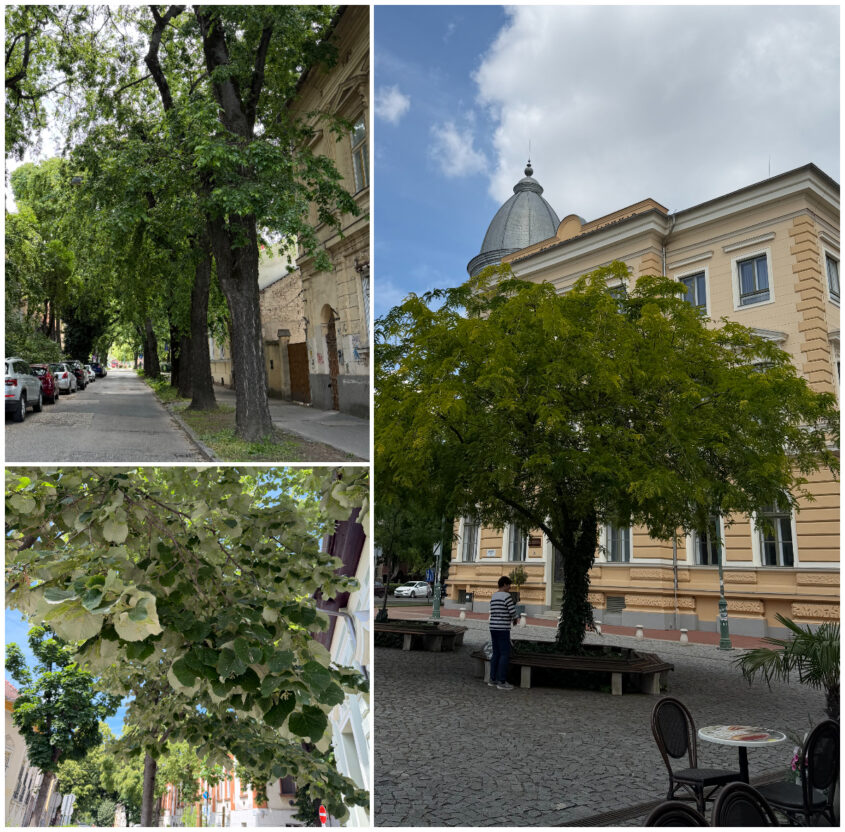
Unlike its sister Art Nouveau city of Subotica in Serbia – Szeged shows some love as part of the European Union. (Hungary joined the EU in 2004, although it is not yet on the Euro). Less graffiti, (much less), streets and sidewalks in better shape, a lengthy riverside park along the Tisza river (now controlled from floods with movable dikes), with boardwalk, bike trail, playgrounds, terraces, statues, sculptures. Such a pleasant mid-size city – you can feel time slowing down.
Everyone on bikes, the soft summer night filled with pedestrians and outdoor cafes as people set up tents and booths for a summer festival. The linden trees in bloom with their silvery leaves waving overhead. Old-timers play bocce, people stroll and linger over coffee and ice cream and head to the national theatre or opera in the evening. Like Plovdiv in Bulgaria – this is a place to just be.
Fortunately for us (but maybe not for the locals) there are few tourists. A huge plus seemed to be the almost tangible buoyancy at the recent election that sent Viktor Orban packing. That, along with the 16 billion Euros unfrozen by the EU coming its way.
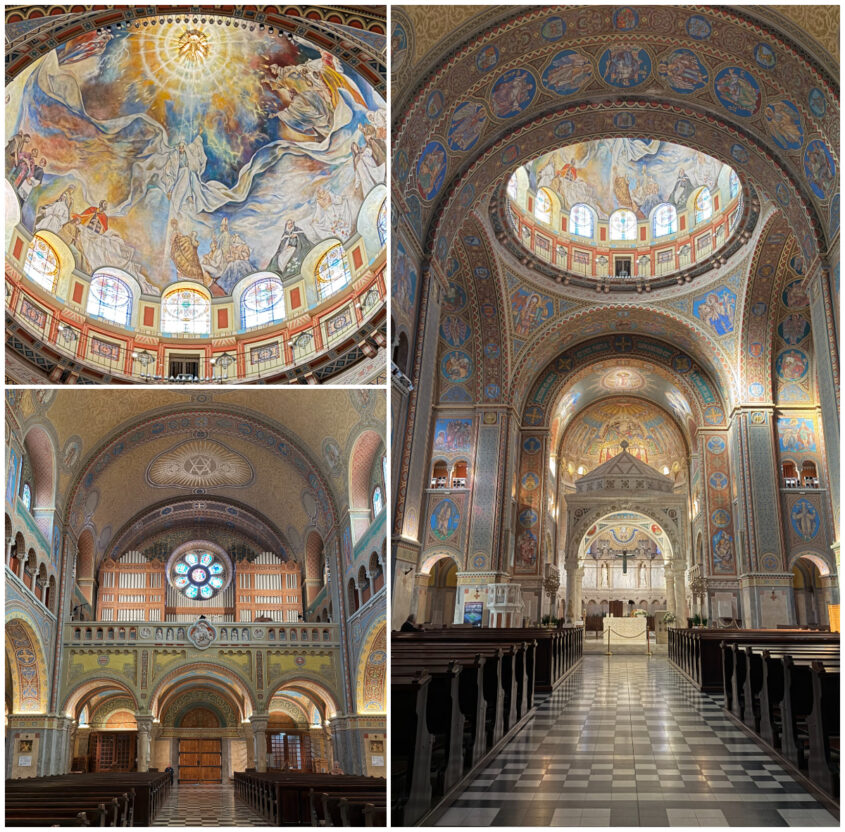
But we’re not finished yet. The Szeged Cathedral – Votive Church – built in the neo-Romanesque style is another stunner. The interior is an Art Nouveau marvel of design, mosaic, paint, stained glass and carving. Just before sunset it is suffused with light pouring in from the dome. Very contemplative.
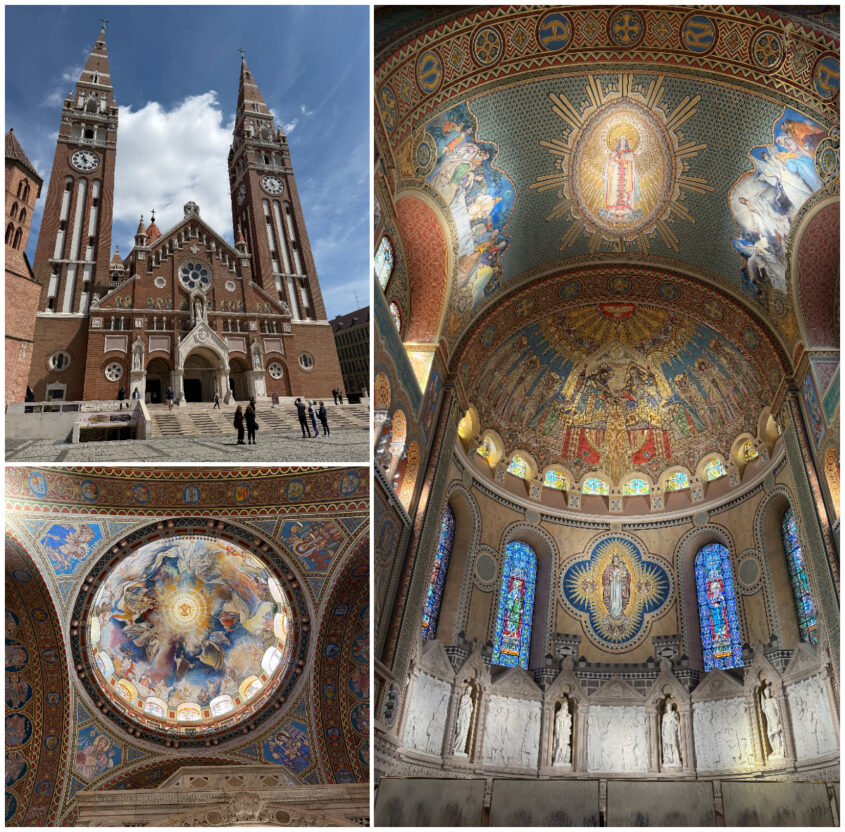
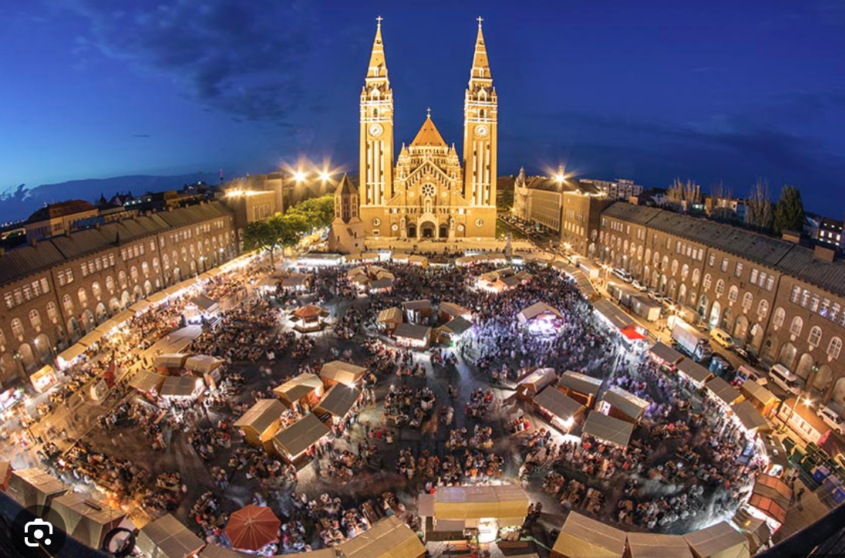
Surrounded by sculptures commemorating various historical events, and across from the University, the cathedral holds sway over a large Italianate piazza that is being set up for a concert.
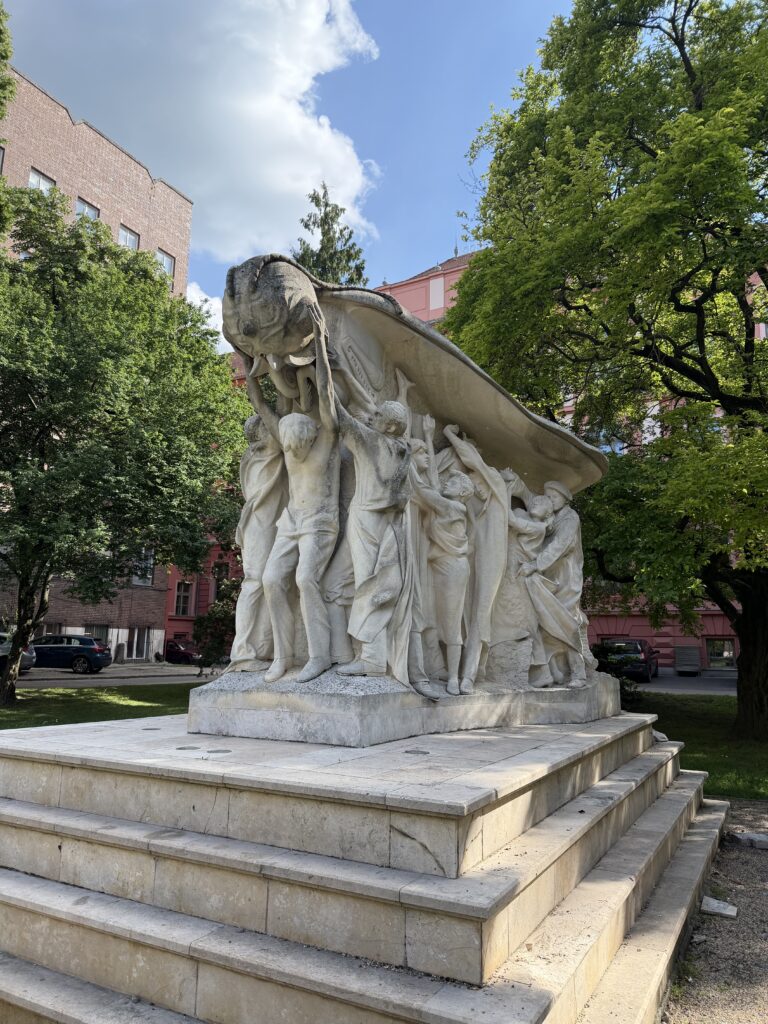
Just off the plaza is a statue commemorating the 1956 student-led uprising against the communist state. At first glance, it looks like a large bug squashing a crowd of people. But it’s actually a butterfly emerging from its chrysalis but not yet ready for flight. The youth under its wings are trying to rise to their full height to propel it upward. The wings never emerged and almost 3,000 died in the ’56 uprising with thousands more wounded, arrested, imprisoned.
Too short a time in this lovely city! After a long evening walk listening to sounds of concerts pouring out into the spring night, it’s time to pack and head to Transylvania.